Local Grief Altars
Thank you to Minneapolis Area Grief Tenders and beautiful neighbors for building out this Great Idea in Minneapolis and St Paul neighborhoods.
‘The federal occupation has forever changed the landscape of our streets, our communities, and our history. Let us not forget our undying rage at state violence, our deep love for our community, and our personal and collective grief.’
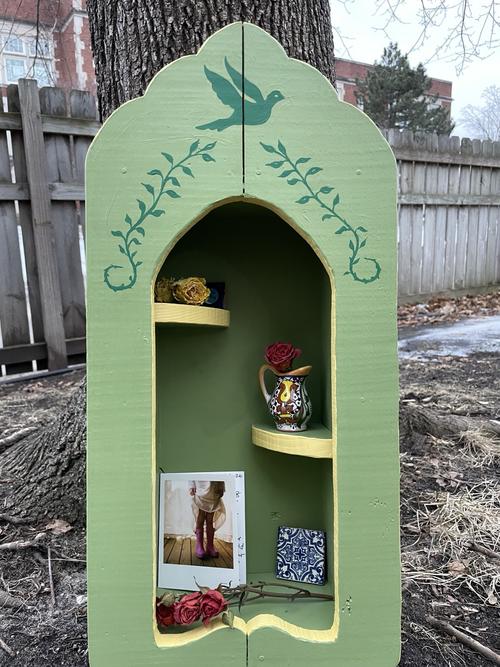
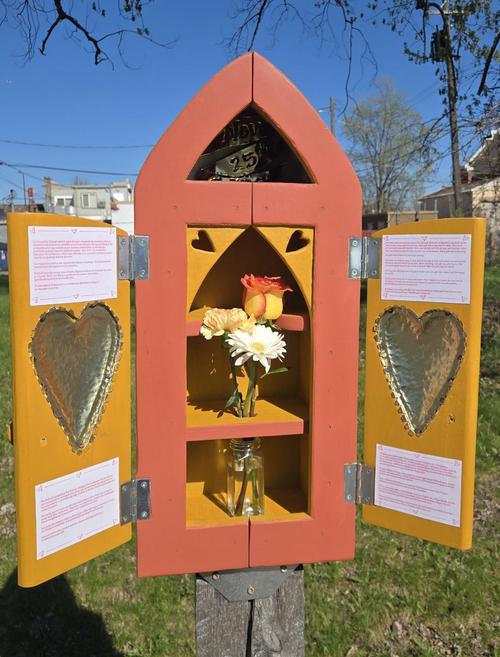
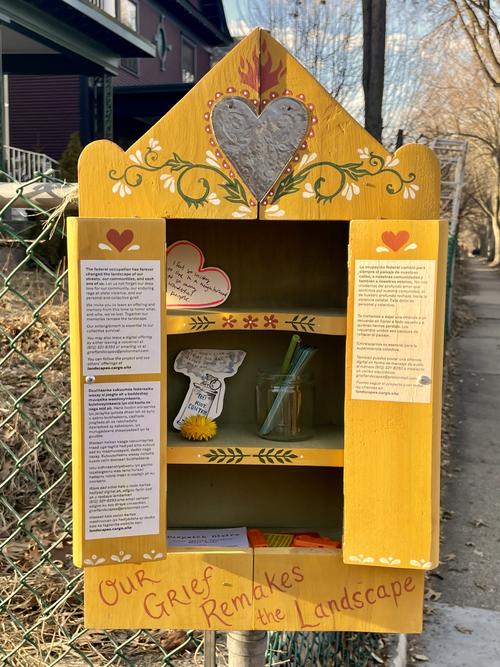 These words introduce folx to the ‘Landscapes of Grief’ physical grief altars – two in the Powderhorn Neighborhood in South Minneapolis and one in St Paul – which were created by a collective of Grief Tenders and artists.
The Grief Altars invite people to ‘leave an offering and memory from this time to honor what, and who, we’ve lost’. This interaction allows the community as a whole to participate together in working through their grief.
The collective also supports a Landscapes of Grief website where they share a collage of photos commemorating street gatherings of grief, outrage, and community action.
Both the physical altars and the online collage are ways to honor the community’s shared grief, collective outrage, experienced terror, and love for one another.
Learn more about Grief Altars and the Landscapes of Grief project on their website.
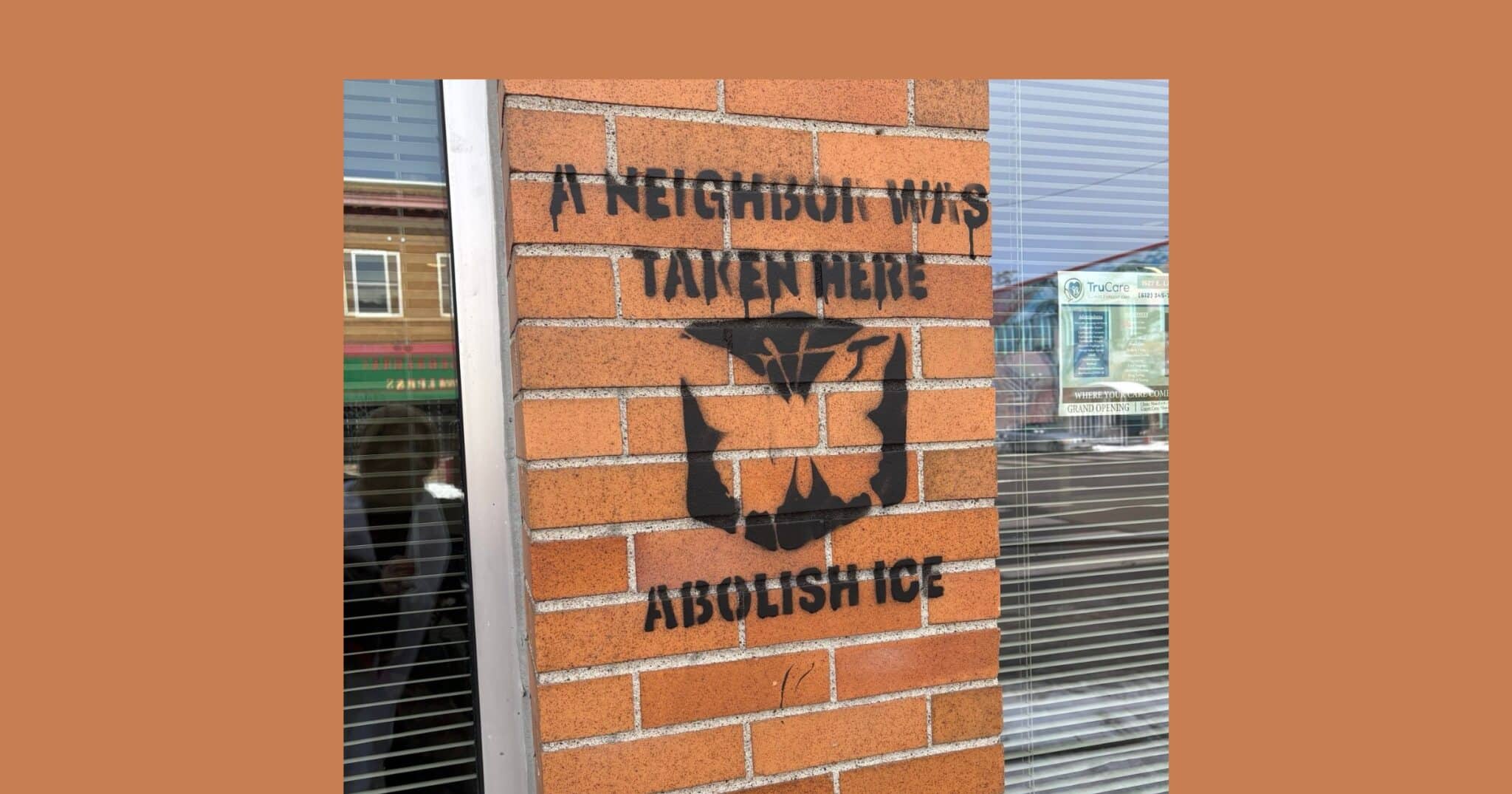 One of the Grief Altar creators is also working with a team at the U of M on Here & Gone: Commemorating ICE Abductions in MN, a ‘crowd-sourced public archive to collect images of signs and artwork installed at sites of ICE abductions’ as a way to document ‘the ways neighbors have been marking space (and who belongs in it), commemorating their kidnapped neighbors, and remembering the occupation by making the invisible visible.’
The motivations behind this project may be important for local communities to consider:
- ‘What does mapping tell us about local communities?
- How does local community response connect to how communities across the world have responded to immigration enforcement?
- What can a map tell us about how local communities define who belongs there?
- How can mapping signs in a neighborhood inform national or global historiographies of migration?’
Individuals are encouraged to share their photos of signs identifying where people were abducted by ICE.
 This is all good work.
Community building work.
Work that we, as church, are called to do.
We can join this work wherever we are.
Action Steps:
- Invite the community or neighborhood into conversation.
- Include local artists.
- If another organization or collective is already engaged in this work, wonder how you might walk with them.
- Listen to peoples’ stories: experiences of trauma and fear, rage, disbelief, anxiety, etc. Hold these stories with grace.
- Offer pastoral care/grief tending care appropriately.
- Map sites where people were abducted, families were locked in their homes for fear, vigils or protests were held, or other traumas or acts of resistance occurred.
- Make signs.
- Gather photos.
- Make art.
- Make grief altars.
- With care for ongoing safety, discern sites for grief altars, art installations, or signs.
- Share these sites, the intent behind them, and the invitation to contribute as discerned by their creators on your congregation’s website and/or create a distinct website for this communal sharing.
- The object is not to have the congregation ‘own’ this, but the community. The congregation is one of many partners in this project.
- Recognize that the ‘end’ of Operation Metrosurge did not end peoples’ fear and trauma or the ongoing injustice of US immigration policies. Become familiar with support organizations such as:
- Monarca
- MIRAC (MN Immigration Rights Action Committee)
- Defend 612
Building and strengthening local communities around neighbor-love and justice is one of the most important callings of the church today. Tending grief, honoring traumas, and creating spaces for story sharing are ways the church can live into this call.
~~~~~
Update – June 10, 2026: Join Grief Altar Creators in South Minneapolis for another round of Collaborative Street Altar Art Builds at the South Side of Powderhorn Park.
*Wednesday, July 8, 2026 – 6:00-9:00 PM
AND
*Sunday, July 12, 2026 – 3:00-6:00 PM